Saturday, 12 February 2011

Leaders Clash On Plans For Big Society


I must say if at first you don't succeeed try and try again. When my friends tweeted, sent me messages on facebook and left messages on my voicemail I return all calls to them to say "I make Up My own Mind If and When I feel that Ed Miliband Did Okay I will praise Him When He Gets It Wrong We Have A right To Critise Him For Not Leading The Labour Party"

After a series of setbanks for the policy, Mr Miliband asked the Prime Minister: "How is your Big Society going?"

Mr Cameron claimed all MPs backed his idea of devolving power to councils and communities.

He said: "I believe probably every single member of this House of Commons spends time in their own constituency encouraging volunteering, encouraging philanthropic giving and wanting people to play a bigger part in a bigger society."

The Labour leader responded: "We all support thriving communities and that's why there is such concern for charities up and down the country."

He quoted Dame Elisabeth Hoodless, who is stepping down as head of Britain's Community Service Volunteers (CSV), after warning the Prime Minister his policies were "destroying the volunteer army".

David Cameron Defends His Big Society

The Prime Minister defended his policy on the Big Society

Mr Cameron said he did not agree with Dame Elisabeth, adding: "We are putting £470m across this spending review into charities and voluntary bodies."

The Prime Minister then went on to announce a boost for his Big Society agenda as part of the deal agreed by the Government and the banks.

He told MPs the Big Society bank will take £200m from the four major banks to invest in the voluntary sector.

Mr Cameron said Labour "put money into the banks, we are taking money out of the banks and putting it in to the Big Society".

But Mr Miliband said the Prime Minister's cuts were threatening his flagship policy.

He said Mr Cameron was "cutting too far and too fast and society is becoming smaller and weaker, not bigger and stronger".

Middle Classes 'To Feel Force Of Cuts'


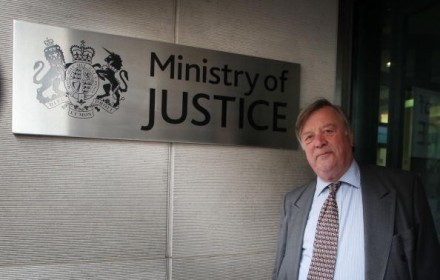
These very words will live to see the coalition via Ken Clarke to regret saying Britain's middle classes do not know what is about to hit them, Justice Secretary Kenneth Clarke has warned.

The Conservative minister said Middle England did not appreciate how hard the Government's spending cuts would affect their lives - but that would change this year once the cutbacks are felt.

Mr Clarke warned that there would be "no quick rebound" and it would be a "long haul" before the economy gets back to normal.

Speaking to the Daily Telegraph, he said: "One reason we're going to get some political difficulty is that (while) the public knows we've got to do something about it, I don't think Middle England has quite taken on board the scale of the problem.

"That will emerge as the cuts start coming home this year. We've got to get on with it [but] it's going to be very difficult. If someone says it's not as bad as all that, I say (they) just don't realise the calamitous position we're in.

I don't think Middle England has quite taken on board the scale of the problem. That will emerge as the cuts start coming home this year.

Justice Secretary Kenneth Clarke

"We're in for a long haul to get back to normality. There are so many uncertainties internationally, and I do not see a quick rebound."

Mr Clarke was chancellor of the exchequer in the last Conservative government.

His warning comes after shock figures showed that the economy shrank in the last three months of 2010, raising new fears of a possible double-dip recession.

Meanwhile, the country's biggest union will stage a huge rally later to launch a campaign against "catastrophic" cuts and thousands of job losses in youth services.

Unite warned that one in four youth services such as volunteering projects and youth clubs in England faced spending cuts of up to 30%.

Some local authorities, including those in Norfolk, Suffolk, Buckinghamshire and Manchester, were planning to axe youth services altogether after having central government funding slashed, said the union.

Around 1,000 young people, some as young as 12, are expected to join today's protest in Solihull, West Midlands.

Gloves Off Gove Councils Win Fight Over School Improvement Cuts


The Government's spending cuts have been dealt a blow after six local authorities won the right to challenge the Education Secretary's decision to cancel school building projects.

The school improvement project had been announced by Labour

The Building Schools for the Future (BSF) programme - initially proposed by Labour - was drastically curtailed last July after the Coalition took power.

BSF was among the first education schemes to be cut back by Education Secretary Michael Gove.

But Mr Justice Holman, sitting in London, declared Mr Gove had unlawfully failed to consult them before imposing the cuts.

In five of the cases the failure was "so unfair as to amount to an abuse of power", said the judge.

The victorious authorities include Waltham Forest Council, Luton Borough Council, Nottingham City Council, Sandwell Council, Kent County Council and Newham Council.

Michael Gove

Education Secretary Michael Gove is to look again at his decision

The judge said: "However pressing the economic problems, there was no overriding public interest which precluded consultation or justifies the lack of any consultation."

Mr Gove's decision-making process was also unlawful "because of his failure to discharge relevant statutory equality duties under the Sex Discrimination Act, Race Relations Act and Disability Discrimination Act."

A Department for Education spokesman said: "We are delighted that the judge did not call into question the decision to end the wasteful and bureaucratic Building Schools for the Future programme.

"On the substantive points he concluded that it was a rational decision and that the authorities involved had no expectation of being allowed to proceed with their projects."

The ruling calls into question every school building scheme cut by Michael Gove and is a damning verdict on his competence as a Minister.

Shadow education secretary Andy Burnham

"Mr Gove will now look again at his decision with regard to these authorities with an open mind, taking representations from them, he said.

Shadow education secretary Andy Burnham said: "This ruling is a victory for all the communities and children betrayed by Michael Gove.

"They deserve no less than a full apology from him today and a commitment to act quickly on the court's finding.

"The ruling calls into question every school building scheme cut by Michael Gove and is a damning verdict on his competence as a Minister.

"He must tell us today how much public money he has spent trying to defend his botched and unfair decisions."

Chris Keates, general secretary of the NASUWT teaching union, said: "The councils involved are to be congratulated for making a stand on this issue.

"The coalition Government has shown time and again a reckless disregard for due process and consultation.

"Teachers, pupils, parents, and local councils were all sidelined. Since May 12, programmes, grants and organisations have been thoughtlessly abolished with little, if any, regard for the consequences.

"BSF was a classic example of this, and it's now come back to bite the Secretary of State."

Thursday, 10 February 2011

Ed Miliband & Douglas Alexander MP celebrates Chinese New Year With Chinese Community Leaders

Senior members of ‘Chinese Communites met up 9 Feb 11 at Portcullis House, Westminster, to celebrate ‘Year of the Rabbit’.

The Labour Party is proud of the vibrant Chinese community across the United Kingdom. They bring with them an international cuisine, diligent work ethics, cherished culture, and values that are akin to Labour’s.

Hard working families wanting the best for their children so that they can move up the social ladder, engaging in community organising, entrepreneurial zeal in running businesses, caring for our elders – these are intrinsic Labour values, which we can all be proud of.

Chinese and Labour values whether it is about individual, families or communities are aspirational and progressive. These values prepare us well for increasingly challenging times.

Sonny Leong, President of ‘Chinese for Labour’, gave the speech, as well as Ed Miliband MP and Douglas Alexander MP.

Chinese Communites and the Chinese media from all over the UK came to the event to listen to the leader of the Labour Party about the forgotton community.

Tuesday, 8 February 2011

PM Told Spending Cuts Will Hit 'Big Society'


Now we know for sure exactly what the the so called Big Society stands for Big Con which equals big losts in both public and voluntary sectors with cheap labour. Its no wonder that the coalition is very divided about the Big Con if you see a earlier article written see http://gordonlyew.blogspot.com/2011/02/big-society-chinese-voluntary-sector.html

The Prime Minister has been warned spending cuts could see Britain's volunteers being turned away from projects.

Dame Elisabeth Hoodless said the cuts could undermine David Cameron's key policy of forming a 'Big Society'.

Dame Elisabeth is stepping down as the head of Britain's largest volunteering charity, the Community Service Volunteers, after more than 40 years.

She told Sky's political editor Adam Boulton that if money were withdrawn too quickly from projects then the future for volunteering would be "dire."

Dame Elisabeth said the Big Society had "immense potential" but criticised a lack of strategy from the government.

She also said there should be more opportunities for 18-year-olds to become involved in volunteering.

Her comments are another blow to the government's Big Society concept.

Liverpool City Council announced last week they would no longer support the project because of cuts to public spending.

It was one of four pilot areas for the scheme but withdrew last week.

Shadow minister for the Cabinet Office Tessa Jowell said: "The Tory-led government are on the brink of destroying this country's great tradition of community support and solidarity."

However Cabinet Office minister Francis Maude told Sky News the Big Society was "taking hold" and denied there was any cause for concern about the project.

Monday, 7 February 2011

Cameron Sparks Debate On Multiculturalism


Currently there are certain Far Right Groups that does not want to see an end of Multiculturalism in the United Kingdom such as the EDL and BNP.

Whilst on the other hand Cameron has done us no favour with the timing of his speech criticised “state multiculturalism” in his first speech as prime minister on radicalization and the causes of terrorism. He also signaled a tougher stance on groups promoting Islamist extremism.

David Cameron was accused of playing into the hands of rightwing extremists today as he delivered a controversial speech on the failings of multiculturalism within hours of one of the biggest anti Islam rallies ever staged in Britain.

Muslim and anti-fascist groups questioned the prime minister's judgment and sensitivity to the issues, saying he had handed a propaganda coup to the hard-right English Defence League as 3,000 of its supporters marched through Luton chanting anti-Islamic slogans.

Some of crowd were jubilant, saying that Cameron "had come round to our way of thinking". Paul Bradburn, 35, from Stockport, said Cameron was "coming out against extremism".

He added: "The timing of his speech is quite weird as it comes on the day of one of the biggest EDL demos we've ever seen. If he wants to start sticking up for us, that's great."

Matt, 16, a school pupil in Birmingham who was at the march said: "He believes what we believe to some extent."

Downing Street issued a robust defence saying the prime minister was "absolutely unapologetic".

A spokeswoman said the speech had been "in the diary for months". She added: "The idea that he would be blown off course on an issue as fundamental as this by the English Defence League is ridiculous and extraordinary."

Cameron told the Munich Security Conference, attended by world leaders, that state multiculturalism had failed in this country and pledged to cut funding for Muslim groups that failed to respect basic British values.

He blamed the radicalisation of Muslim youths and the phenomenon of home-grown terrorism on the sense of alienation that builds among young people living in separate communities and the "hands-off tolerance" of groups that peddle separatist ideology.

Just a few hours later, EDL leader Stephen Lennon told the crowd they were part of a "tidal wave of patriotism" that was sweeping the UK.

Activists, some wearing balaclavas and others waving English flags, chanted "Muslim bombers off our streets" and "Allah, Allah, who the fuck is Allah". EDL supporters from Newcastle, Scotland, London, West Yorkshire and Sheffield joined Luton-based supporters. There were also flags representing German, Dutch and Swedish Defence Leagues.

Nick Lowles, director of anti-extremist group Hope Not Hate, said the timing of Cameron's remarks had allowed EDL members to claim the government was on its side.

"The prime minister's comments were unhelpful. On a day when extremist groups of varying persuasions were descending on Luton, his words were open to misinterpretation at best, and at worst were potentially inflammatory.

"Whatever the intention, the timing of this speech has played into the hands of those who wish to sow seeds of division and hatred."

Mohammed Shafiq, chief executive of the Ramadhan Foundation, said Cameron had handed a "propaganda coup to the EDL and their extremists".

Labour also weighed in, attacking the timing of the speech and rejecting implications from Cameron that it had failed to address issues of Islamic extremism and the complex issues of multiculturalism during 13 years in office.

Former home secretary Jack Straw said it was "ill-timed" and "ill-judged". Former Labour minister Margaret Hodge said: "This is a hugely difficult area. I agree that there are some areas where we need strong assimilation – speaking English and abiding by British law.

"But Cameron appears to suggest we can impose a much wider assimilation with British values and the danger is that this approach will perversely entrench those separate identities that he wants to meld.

"The state has to be very cautious in using its power to mould cultural values. Comparisons with far-right groups on the day the EDL is mounting a demonstration is needlessly provocative.

"It is not merely the Muslim community's responsibility to combat extremism; we all have responsibilities, particularly to ensure that minority communities do not feel excluded."

As the row over the prime minister's remarks intensified, Tory co-chairman Baroness Warsi called for an apology from shadow justice secretary Sadiq Khan after he accused Cameron of "writing propaganda for the EDL".

"For Sadiq Khan to smear the prime minister as a rightwing extremist is outrageous and irresponsible. David Cameron has made it clear that he wants to unite Britain around our common values and he has done so in measured language," she said. "It is right that we make it clear: extremism and Islam are not the same thing.

"And, as David said, it's important to stress that terrorism is not linked exclusively to any one religion or ethnic group."

Saturday, 5 February 2011

The ‘Big Society’ & the Chinese Voluntary Sector


The Tory-led government’s cuts to the voluntary sector are ignorant, ideological and incompetent and will impact on those in most need in the Chinese community

Chinese communities have been resident in the UK since the latter part of the 1800s, and remain the third largest minority in the nation. Over this period an extensive Chinese voluntary sector has built up in the UK, with Chinese Associations, Schools and Women’s Groups across the country. These organisations provide a range of services to young people and older people (including lunch clubs, assistance with accessing public services, welfare services, advice and counselling) as well as promoting Chinese language education and Chinese culture.

As a community, the Chinese face some particular challenges, including language barriers, isolation and a lack of social support, so these services are vital. It has been estimated that 70–80 per cent of first generation Chinese immigrants do not speak English. Mainstream services tend to be underused due to language. Many carers cannot always communicate with service providers, and are not always aware of the services available. Moreover, the help that is available tends to be inadequate, and not specific enough to meet their needs.

The stereotype of Chinese people in the UK directly shapes the service provision services for them. Chinese families are seen as being hardworking, self-reliant, keeping themselves to themselves and preferring to ‘care for their own’. This is despite the reality of changing family structures. Geographical dispersal and lack of political organisation mean that few Chinese people deal with their problems on a community basis, or actively promote their interests as a community. Consequently, many first generation Chinese are not fully integrated into the social mainstream and require specialist support services provided by the Chinese voluntary sector.

The Tories have been rather unsuccessfully being trying to promote their vision of a ‘Big Society’ and to
boost 'mutual responsibility' by supporting a new culture of volunteering and encouraging people to take an active role in their communities.

A recent ‘Big Society poll’ (conducted by social action network i-volunteer) of over 1,000 members of civil society has found that 42 per cent believed that ‘Big Society’ is ‘politically rebranding existing community action’. A further 21 per cent saw the Big Society as a ‘cover for cuts’. A recent Harris poll for the Financial Times shows that only 25 per cent of the British public believe they should be ‘encouraged to give up some of their time to help support public services’ compared to 42 per cent in the US.

However, it is clear that the ‘Big Society’ is playing second fiddle to Chancellor Osborne’s deficit fetish and the toxic mix of policy agendas is proving to be extremely risky with potentially disastrous consequences.
Planning for the ‘Big Society’ to fill the empty space left by the retreating state is hard at the best of times; trying to do it whilst urging them to innovate, to conduct structural reform and to oversee massive funding cuts is going to be impossible. Reductions in direct and infrastructure funding to the voluntary sector combined with cuts to local authority funding are threatening the survival of many these organisations. Even transferring services between providers is time consuming, costly and expensive.

Numerous service contracts between voluntary sector and public sector bodies will end in March 2011. Voluntary sector organisations are increasingly fearful of their future, uncertain about sources of future funding and on their ability to maintain staffing levels. They are being forced to draw on their reserves, limit or reduce service provision and delay plans to invest in projects.
Partnerships are crumbling and experience is being lost.

Up and down the country as NHS trusts and local authorities are searching for rapid, unstrategic short term cuts. Provider o
rganisations are being asked to renegotiate contracts mid-year; some have been asked to submit new funding bids to meet short deadlines, to rapidly reduce or increase provision, or to form new delivery partnerships in unrealistic timescales. The smaller, local voluntary sector providers such as Chinese Associations and their service users are directly in the firing line.

The voluntary sector is easily ignored, its commitment to its beneficiaries easily exploited. But at a time when demand for these vital services is increasing, it will be our most excluded people and communities that this Tory-led government will be putting at risk.

Alleged Chinese cyber-spies penetrate Foreign Office computers

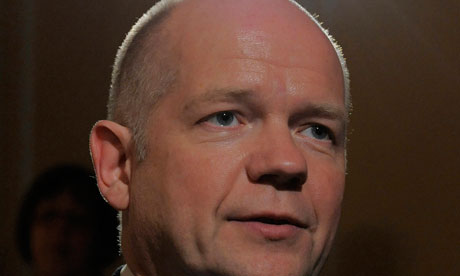
William Hague


Whislt I agree that c
yber-attacks
are on the increase I have to remind (16 pints )
William Hague that it is not just China alone that is using cyber-attacks what about the hard truths that all countries are in it togther.

William Hague speaks during the International Conference on Security Policy in Munich.

China has penetrated the Foreign Office's internal communications in the most audacious example yet of the growing threat posed by state-sponsored cyber-attacks, it emerged tonight.

William Hague told a security conference in Munich that the FO repelled the attack last month from "a hostile state intelligence agency". Although the foreign secretary did not name the country behind the attacks, intelligence sources familiar with the incidents made it clear he was referring to China. The sources did not want to be identified because of the sensitive nature of the issue.

In his speech Hague was reflecting growing anger and concern within the government about the increasing threat posed by cyber-espionage – states, as well as individuals, using cyberspace to steal defence, diplomatic and commercial secrets.

"It is a new development. The UK is prepared to admit the attacks were state-backed," said Alexander Neill, head of the Asia programme at the Royal United Services Institute thinktank.

The foreign secretary said the FO attack came in the form of an email sent to three of his staff "which claimed to be about a forthcoming visit to the region and looked quite innocent". "In fact it was from a hostile state intelligence agency and contained computer code embedded in the attached document that would have attacked their machine. Luckily, our systems identified it and stopped it from ever reaching my staff," Hague said.

In another attack last year, the foreign secretary said Britain's defence industry was "deliberately" targeted. "A malicious file posing as a report on a nuclear Trident missile was sent to a defence contractor by someone masquerading as an employee of another defence contractor," Hague told an audience of western officials and businessmen. "Security meant that the email was detected and blocked, but its purpose was undoubtedly to steal information relating to our most sensitive defence projects."

Hague admitted that a third attack, apparently criminal, had succeeded in evading Britain's defences, with a version of the Zeus malware widely used to extract banking information and other personal details from targeted computers.

"In late December a spoof email purporting to be from the White House was sent to a large number of international recipients who were directed to click on a link that then downloaded a variant of Zeus," Hague said. "The UK government was targeted in this attack and a large number of emails bypassed some of our filters. Our experts were able to clear up the infection, but more sophisticated attacks such as these are becoming more common."

The foreign secretary said government was spending £650m on its cyber defences against such attacks, and working with the private sector. But he added that the international response was "fragmented and lacks focus".

Speaking to journalists later, Hague said: "We're witnessing an exponential rise in the misuse of cyberspace. In a decade, this could be out of control, and we have to start to do the thinking now."

He said Britain was offering to host an international conference this year aimed at establishing global standards.

"Many countries do not share our view of the positive impact of the internet, and others are actively working against us in a hostile manner," he said.

"However as liberal democracies we also have a compelling interest in supporting democratic ideals in cyberspace, and working to convince others of this vision."

General Sir David Richards, chief of the defence staff, last month said the UK needsed its own Cyber Command, similar to that set by by the US defence department. He said that the advance of cyber technology would lead to a "cultural change" in warfare which the UK must be prepared for."We must learn to defend, delay, attack and manoeuvre in cyberspace, just as we might on the land, sea or air and all together at the same time".

Thursday, 3 February 2011

Violent battles in cities across Egypt

Yesterday I watch the television with horror to see Violent battles in cities across Egypt and a young child who is innocent running from the scene of violence to safely.

His only crime is that he is hungry and his only hope of the future is to see or dream of freedom of expression in Egypt one day. Thousands of children in Egypt life depends on whether there will be a Islamic state or a coalition, or a democratic elections where the citizens of Egypt can choose who they want to run the country. Lets not forget that the children are the future of tomorrow therefore free and democratic elections must prevail.


Egypt's pro-democracy revolution descended into violence and bloodshed overnight as President Hosni Mubarak's regime launched a co-ordinated bid to wrest back control of city streets, crush the popular uprising, and reassert its authority.

Bursts of heavy gunfire rained into Tahir square just before dawn today and there were reports that three more people had been killed. Protest organiser Mustafa el-Naggar said he saw the bodies of three dead protesters being carried toward an ambulance, while another witness spoke of 15 people being wounded.

Clashes had continued into the early hours even though the pro-Mubarak supporters had been pushed back to the edge of the square and explosions – possibly from gas canisters – echoed around the area.

There were extraordinary scenes in the centre of Cairo as anti-government demonstrators fought running battles with organised cohorts of Mubarak supporters, exchanging blows with iron bars, sticks and rocks.

At one point pro-Mubarak forces rode camels and horses into central Tahrir Square, scattering opponents. At least three people were killed yesterday and up to 1,500 injured according to medical sources.

A palm tree and a building caught alight while fires were burning outside the historic Egyptian museum as petrol bombs were hurled back and forth between the two opposing factions.

The violence was immediately condemned by David Cameron, the Obama administration, and Ban Ki-moon, the UN secretary-general, who condemned what he described as attacks on peaceful demonstrators. The White House warned that if any of the violence was instigated by the government it should stop immediately, and also strongly criticised the beating of local and foreign journalists, including a CNN reporter.

But after Mubarak's announcement that he would not seek another term at elections due in September, the regime appeared to be in no mood to listen – and determined to regain control after a week of near anarchy.

The strident tone was illustrated by a startling public rebuff to Barack Obama. Rejecting his overnight demand that the promised political transition and reforms begin without delay, the Egyptian foreign ministry said bluntly that meddling by "foreign parties" was unacceptable and was "aimed to incite the internal situation".

Speaking in an exclusive interview with the Guardian, opposition leader Mohamed ElBaradei said: "Today's violence is again an indication of a criminal regime that has lost any commonsense. When the regime tries to counter a peaceful demonstration by using thugs … there are few words that do justice to this villainy and I think it can only hasten that regime's departure." Mubarak's announcement had been "an act of deception", he said. "But after today people are realising just what they're dealing with."

The trouble began when tens of thousands of anti-government demonstrators in Tahrir Square ignored orders from the army to disperse. The army's move marked a change in tactics from previous days, when it declined to intervene, describing the protests as legitimate, and troops were feted by protesters.

At the same time Mubarak supporters, who had taken no part in events, began to gather, travelling in cars or by foot, numbering in the tens of thousands. Some said they had been bussed in from the countryside by the regime and claimed they had no intention of initiating a confrontation. Others said they had recently swapped sides, saying Mubarak had made enough concessions and he should have time to usher in change.

Initial sparring between rival groups quickly turned into running battles. Then, just before 2pm, armed with clubs, bats, knives and even homemade spears, a pro-Mubarak demonstration that had been gathering for several hours 800 metres from Tahrir Squareon the Nile Corniche, outside the state television station, charged in.

Guardian journalists in the square – close to both sides – witnessed pitched battles that turned the square into a warzone as anti-Mubarak protesters tried desperately to hold their ground and both sides tore up paving stones to use as weapons. Among those singled out for attack were journalists including Anderson Cooper of CNN and two Associated Press correspondents. A Belgian journalist – Maurice Sarfatti, who uses the byline Serge Dumont – was reportedly beaten, arrested and accused of spying.

At one stage tanks attempted to move between the two groups but did little to stop the escalating clashes. In one incident soldiers moved out of the way to permit pro-Mubarak demonstrators to reach their opponents. By late afternoon, groups of men were on roofs in Champollion Street, a few hundred metres away, hurling missiles down on those beneath them.

At just after six o'clock automatic weapons fire was heard. Some pro-Mubarak forces appeared to be plainclothes police, while others involved in the assault in Tahrir Square were said to have been paid by the regime. The interior ministry denied the reports, while the army denied firing on protesters.

In other cities the regime fought back strongly. In Alexandria, Mubarak supporters staged a furious counterprotest in a square that has seen protests for nine days, sparking violent arguments and altercations between rival groups.

The violence increased fears in western capitals that the crisis, far from being defused, was taking a more sinister turn. David Cameron said: "If it turns out that the regime in any way has been sponsoring or tolerating this violence, that would be completely and utterly unacceptable."

BBC editor Craig Oliver replaces Andy Coulson


David Cameron yesterday marked a break with the era of Andy Coulson by appointing a senior BBC TV news editor with no links to the Murdoch empire as the new No 10 communications director.

Craig Oliver, who made his name revamping the News at Ten and who ran the BBC's general election coverage last year, will be paid £140,000 a year and will act as a political special adviser.

The recruitment of a senior BBC figure shows that Cameron and George Osborne, who met Oliver over the weekend, recognise that they need to place some distance between Downing Street and Rupert Murdoch's News Corporation.

Coulson announced his resignation on 21 January after concluding that the swirl of allegations about illegal phone hacking from his time as News of the World editor had made his job impossible. Coulson has always denied knowledge of any wrongdoing.

Downing Street said that No 10's relations with News Corp had nothing to with the decision to hire a BBC executive. One source said: "Craig was simply the best candidate."

Fears of offending the Murdoch empire were highlighted yesterday when Tom Baldwin, Oliver's Labour counterpart, asked members of the shadow cabinet to show restraint on phone hacking and not to attack one newspaper group "out of spite".

In an email sent on his behalf, which was leaked to the New Statesman, Baldwin also called on shadow ministers not to link allegations of phone hacking with questions about News Corp's bid to take control of BSkyB.

The email said: "On phone hacking … this is not just an issue about News International. Almost every media organisation in the country may end up becoming embroiled in these allegations … We must guard against anything which appears to be attacking a particular newspaper group out of spite."

Further evidence that hacking was used regularly by the News of the World emerged yesterday when new details of the case brought by Nicola Philips, the publicist who is suing the newspaper, were published. Philips alleges the tabloid obtained a story about an affair between actor Ralph Fiennes and a Romanian singer by hacking into her mobile phone.

Philips, who was then working for celebrity publicist Max Clifford, brokered a deal between the singer, Cornelia Crisan, and the Sunday Mirror and the Mail on Sunday, to sell her story for £35,000. She says the News of the World learned of the story by listening to her voicemail messages. The paper tracked down Crisan and published details of her relationship with Fiennes on the same day as its rival titles.

The recruitment of Oliver was Coulson's last act before he left Downing Street on Monday. Coulson telephoned Oliver towards the end of the last week and arranged for him to meet Cameron and Osborne over the weekend.

Cameron said: "I am very pleased that Craig Oliver is to become the new director of communications at 10 Downing Street. Craig has formidable experience as a broadcast journalist. He will do an excellent job in explaining and communicating the government's programme."

Oliver, who voted Conservative at the general election but is not a party member, said: "I'm delighted to be joining David Cameron and his team at such an exciting and challenging time. It's difficult to leave the BBC after a fascinating few years, but this is an opportunity I can't turn down."

Oliver, 41, has been the controller of English at BBC Global News since June 2010 and was the BBC's general election editor last year. He has also worked as editor of BBC News at Ten and News at Six.

From 2002 to 2006, he was the head of output at ITV News. Before that he was output editor at Channel 4 News and at ITV News. He was educated at a Scottish comprehensive and studied at the University of St Andrews. He is married to the BBC News presenter Joanna Gosling, with whom he has three young daughters.

Oliver came to Cameron's attention – via Coulson – in the runup to last year's general election. Coulson broke ground by bypassing the press and giving stories straight to News at Ten.

Big society tsar Lord Wei 'doesn't have enough time to perform role'

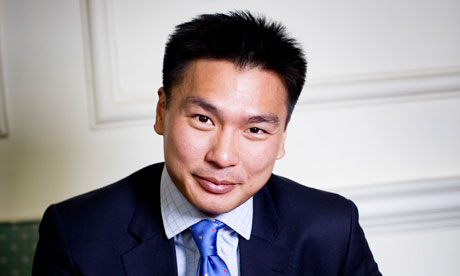
Lord Nat Wei


Lord Nat Wei has no private income to fall back on, and is cutting his voluntary hours to earn more money and see more of his family.

It could become the allegory of the "big society" age. The man appointed by the prime minister to kickstart a revolution in citizen activism is to scale back his hours after discovering that working for free three days a week is incompatible with "having a life".

Lord Wei of Shoreditch, who was given a Tory peerage last year and a desk in the Cabinet Office as the "big society tsar", is to reduce his hours on the project from three days a week to two, to allow him to see his family more and to take on other jobs to pay the bills.

A common criticism of the plans, under which the government hopes that communities will take over the running of local services such as schools and charity projects, is that people don't have time to run a public service on top of holding down a job and seeing their families.

Wei has told friends he is cutting his hours to allow him to earn more money and "have more of a life". He originally worked three full days a week and will now work two days, with the hours split over three, while taking on more non-executive directorships with private companies.

The role is voluntary and Wei had to to give up jobs in the charitable sector when he was appointed to avoid a conflict of interest. Whitehall sources said that when he was invited to take the role he had expected it to be remunerated but was told only the night before that it was a voluntary post and there would be no salary. Other unpaid coalition advisers include Lord Heseltine and the "digital champion" Martha Lane Fox – both millionaires.

Much of Wei's work has focused on how to free ordinary people from the daily grind to give them more time to do voluntary work and involve themselves in their communities under the big society plans. Since taking the post, Wei has had a relatively low profile and there have been suggestions that he has not made enough impact on the public understanding of 'big society'. The scheme is reported to be facing Whitehall resistance and the stretched capacities of local authorities.

Wei, 34, is a former management consultant who has no private income to fall back on. He was a member of Teach First's founding staff team, then worked for Ark, one of the biggest sponsors of academies, before setting up the Shaftesbury Partnership, a social entrepreneurial company.

A Cabinet Office spokesman suggested that Wei had worked extra hours in the early phase of the programme. "The government remains committed to devolving power to citizens and supporting a big society," he said.

• This article was amended on 2 February 2011. The original described Lord Wei as one of the founders of Teach First.

Tuesday, 1 February 2011

Voting Reforms May End In The House Of Lords

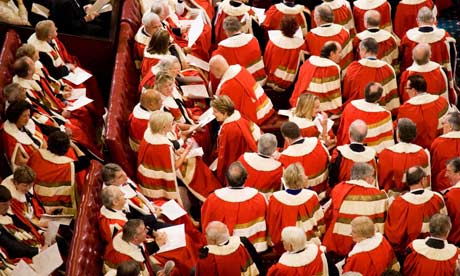
House of Lords


A coalition plan to end debate with a ‘guillotine’ motion would have been defeated by crossbenchers. Photograph: Tim Graham/Getty

A two-week standoff in the House of Lords between Labour and the coalition over a constitutional reform bill was partially resolved today when ministers agreed to a key opposition demand on shrinking the House of Commons.

Labour agreed to abandon a filibustering campaign, which had forced peers to sleep on camp beds in committee rooms during overnight sessions, after the government announced that it would allow limited public inquiries when parliamentary constituencies are redrawn.

Ministers climbed down after it became clear that the government could not deliver on a threat made at the weekend to break convention in the House of Lords by bringing 15 days of debate to an end through a "guillotine" motion.

David Cameron, who had been spoiling for a fight with Labour, was advised that such a motion would be defeated after Baroness D'Souza, leader of the non-party crossbench peers, had said that peers "might as well go home and cease to exist" if a guillotine was imposed. D'Souza tabled a compromise amendment today which prompted Labour to say that it would allow the bill to complete its committee stage by Wednesday evening.

But Lord Falconer of Thoroton, the former lord chancellor, said Labour could not guarantee that the bill would reach its third and final reading stage in the House of Lords by a deadline of Monday 14 February because the party was still demanding more concessions. "This is not the end of the cold war, it is more like detente," he joked tonight.

The parliamentary voting system and constituencies bill, which is one of the most important elements of the coalition's constitutional reform programme, contains key elements for the Lib Dems and the Tories. It is designed to pave the way for a referendum on an alternative vote, due to be held in May, which was the main Lib Dem win in the coalition negotiations last year. It is also designed to deliver a key Tory manifesto pledge by reducing the House of Commons from 650 to 600 MPs by equalising the size of parliamentary constituencies to around 76,000 voters.

The government had been prepared to take the unprecedented step of imposing a guillotine motion in the House of Lords because the legislation needs to reach the statute book by 16 February to allow a referendum on AV to be held by May. The Boundary Commission also needs early notice to redraw parliamentary boundaries to take account of a smaller House of Commons.

The government abandoned its attempt to curtail the debate after all sides accepted the amendment from the crossbench peers. This will allow a public inquiry to be held on the redrawing of a parliamentary constituency if the Boundary Commission declares that one is necessary.

But Labour is still threatening to block the bill during its next stages unless the government gives ground in two further areas by agreeing to:

• Vary the size of the new parliamentary constituencies by 10% above or below the electoral quota size of around 76,000 voters. This would mean that constituencies could vary in size from 83,600 voters to 68,400 voters. Under the government's plans, constituencies can only be varied in size by 5% either way of the 76,000 quota. This means that a constituency should contain no more than 79,800 voters and no less than 72,200 voters.

• Establish a commission to make an assessment after the passage of the bill as to whether 600 is the right size for the House of Commons.

Falconer, who described the possibility of a guillotine as "an abomination", told peers that Labour needed the extra concessions to guarantee the bill's progress.

"Focusing only on the key issues on report, and employing the economy and focus your lordships will expect at report and later at third reading, the further timetable depends on further agreement on substantive issues between the parties. The crossbenches have played a critical part in getting us to the good point we are on the substantive issues. We commit ourselves to work hard now to try to reach the necessary further agreement."

Lord Strathclyde, the Tory leader of the house, told peers: "The government will be bringing forward a package of concessions at report stage of the bill and I'm sure that the whole house will welcome that. We are in the welcome position of having an agreement to complete committee stage by the end of Wednesday this week.

"But equally I am sure that I have no need to remind the house that we need to return this bill to the Commons by the end of Monday 14 February – this is two weeks today – if the referendum is to be held on May 5. From the soundings I have taken I feel confident the majority of members in all parts of the house share this aim."

The crossbench peers withdrew their amendment after the government accepted its premise.

D'Souza told peers: "It is perhaps unusual for a crossbencher to intervene at this late stage of a bill, particularly in a bill which has become so politicised. Crossbenchers are, in fact, independent and not politically aligned.

"However, something of an impasse had been reached towards the end of last week and I was encouraged by one or two people to see if there was any way in which we might play a useful role. I do so with great humility. The other thing that perhaps has moved me, certainly, and a number of other crossbenchers was the shadow or the threat of anything approaching a 'closure motion' in this house."

The agreement showed weaknesses on both the coalition and Labour sides. The coalition backed down after it became clear that opposition among its own peers and the crossbenchers meant that the guillotine motion would not pass. But Labour had to give ground and reach a deal because crossbenchers were losing patience with its aggressive tactics.

Article By Sonny Leong When you have a friend like Cameron, who needs enemies?


As we usher in the new lunar year, the Year of the Rabbit, Chinese families everywhere will be gathering for their reunion dinner to forgive each other and pay respect to our elders.

Will China forgive Cameron for his foolish rant about ‘authoritarian capitalism’?

In his recent speech in Davos, David Cameron launched an extraordinary attack on 'authoritarian capitalism' as he warned businesses investing in those countries at their peril. Though he did not refer to China and Russia directly, observers were left in little doubt which countries he was referring to in his attack on 'authoritarian capitalism'.

'If you're looking to set up a headquarters abroad, are you going to invest where your premises can be taken away from you? Where contracts are routinely dishonoured?

Where there's the threat of political upheaval? Or are you going to invest where there are property rights, the rule of law, democratic accountability?

Is this a case of sour grapes? China attracted record levels of foreign capital in 2010. The country's Ministry of Commerce revealed inward investment totalled $106 billion (£66 billion) last year, an increase of 17.4 per cent on 2009. In December alone, foreign direct investment (FDI) into China stood at more than $14 billion.

Writing in the Wall Street Journal on his trip to China last October,

Cameron said:

“[The trip will] provide a further step forward in UK-China relations, adding momentum to our commercial relationship and cementing an economic and political partnership that can help to deliver strong and sustainable growth and greater security for us all in the years ahead.

“On this visit alone, Britain is set to sign new contracts worth billions of dollars involving companies across the UK and cities all over China.”

Apparatchiks in Beijing will not take lightly to Cameron’s Davos statement. On one hand he wants to do business with China, coupled with warm words encourage Chinese businesses to invest in Britain and with the other slaps China in her face. There is a well known Confucius saying, “If you drink with a friend, a thousand cups are too few; if you argue with a man, half a sentence is too much”. China must be feeling so.

A former US national security adviser Zbigniew Brzezinski said, Western countries should be coming to terms with China: "(A) drift into escalating reciprocal demonisation" would be the worst outcome for Asia's long-term stability as well as for the China’s relationship with developed economies China has done more than any other economy to pull the world out of recession, and may remain an important engine of global growth for some years to come.

According to the 12th Five-Year Plan (2011-2015), China will shift from export-led and investment-driven growth to a more balanced pattern of economic development. As a result, China's growth rate may be significantly lower, but more sustainable. At the same time, the rest of the world can expect China to play a more active role in areas such as fighting climate change, poverty alleviation, global infrastructure development, and reform of the international monetary system.

The essence of liberal capitalism is its propensity towards universalism. In the pursuit of profit, capitalism pushes beyond local boundaries, whether village, town, region or country. The rise of modern capitalism in the late nineteenth century erupted into the international conflict that dominated much of the twentieth century.

Capitalist development has a long history in China. Prior to the early modern period China’s embryonic capitalism was far more developed than that of Europe. China’s capitalist development took place within the context of a powerful state that, in periods when the system functioned well, shaped the pattern of capitalist development in numerous ways to meet common social interests. This was the foundation of its hugely impressive long-run economic and social development. Confucianism nurtured a deeply developed concept of ‘duty’ which was the foundation of collective action and social prosperity.

Confucianism was a complete philosophy. It combined a carefully thought out system of morality for rulers, bureaucrats and ordinary people with a comprehensive analysis of concrete ways of both stimulating and controlling the market. When the system worked well the government attempted in anon-ideological, pragmatic fashion to solve practical problems that the market could not solve.

The need for ‘constructive engagement’ is more profound now than ever. ‘Destructive engagement’ will lead to disaster. Has the global financial crisis hastened the ending of globalised capitalism?

In the search for solutions to the multiple threats there is no alternative other than to work together across national frontiers, cultures and levels of development, to find a pragmatic, non-ideological, cooperative way to overcome these threats.

Cameron might come to regret his words when China holds back on buying any future UK gilts or worse starts selling UK government bonds. As this is a period for forgiveness, let’s hope China treats his silly comments as coming from a silly boy.

Monday, 31 January 2011

Unions have not ruled out strikes over pension cuts


TUC General Secretary Brendan Barber said this was the issue on which the big unions were most united.

But he vowed the campaign against "deep and rapid" spending cuts would go on, with a mass protest on 26 March.

Ministers have not ruled out new laws to prevent co-ordinated strikes as a "last resort".

Cabinet Office Minister Francis Maude said any "general strike" would, in any case, be illegal.

He said the government wanted a dialogue with unions but they had to recognise that public spending had to be reduced, he added.

'Huge event'

Mr Barber said: "No one is talking about a general strike, but of course these attacks on our members could well give rise to industrial action around specific disputes.

"Today's meeting showed a clear determination for unions to work together on industrial issues including, as a last resort, industrial action when members support it."

He said the government had agreed to talks with unions over the future of public sector pensions and ministers had "now accepted that they will not force through changes in the March budget".


Union leaders may talk tough over strikes but privately they know the risks are huge.

However angry their members may feel, union bosses are acutely aware that in hard times low-paid workers will be very wary of losing money by coming out on strike.

There is a fear too of the likely media and public reaction, and a recognition any campaign of industrial action could simply alienate public opinion.

The legal difficulties in calling strikes are also immense and risk playing into the government's hands by paving the way for fresh anti-union legislation.

Despite all that, the leaders of most of the big public sector unions believe they have no option if they are to show the government they are serious. To quote Mrs Thatcher, they believe "there is no alternative".

But he added: "These will be difficult negotiations as public service workers will not allow their pensions to be hammered. We hope that the talks can make progress, but we cannot rule out industrial action taking place on this issue."

He said the planned demonstration in London on 26 March - three days after Chancellor George Osborne's budget - will be "a huge event at which the British people will come together to show their opposition to the government's chosen course".

Some sources have predicted a campaign of strikes beginning in the spring - but that now appears less likely after the TUC negotiated an agreement with ministers to hold off implementing any changes until June.

Some smaller unions are calling for a more cautious strategy designed to build support among other groups, such as charities, who are affected by the cuts.

'Debt legacy'

Mr Maude told the BBC that public sector workers were not to blame for the UK's budget deficit but spending did need to be cut.

"We want to engage with the unions, and we are doing so, to try and get the best result for their members," he told the BBC. "We do not want a political fight with the unions and some union leaders are sounding as if that is what they want.

"We want to engage to get the right outcome for all taxpayers that is fair for future generations so they do not have to bear these terrible costs of Gordon Brown's debt legacy."

The prospect of further industrial action has led some senior Tory figures, including Mayor of London Boris Johnson, to call for changes to trade union law to ensure that strike ballots can be lawful only if 50% of union members take part.

Mr Maude downplayed this possibility but did not rule it out.

"We think the laws work pretty well as they are and any changes to the law would be very much a last resort," he said.

The issue has risen up the political agenda following a series of high-profile strikes, including walkouts by London Underground staff and refuse collectors working for Birmingham City Council.

Unions have not ruled out strikes over pension cuts


TUC General Secretary Brendan Barber said this was the issue on which the big unions were most united.

But he vowed the campaign against "deep and rapid" spending cuts would go on, with a mass protest on 26 March.

Ministers have not ruled out new laws to prevent co-ordinated strikes as a "last resort".

Cabinet Office Minister Francis Maude said any "general strike" would, in any case, be illegal.

He said the government wanted a dialogue with unions but they had to recognise that public spending had to be reduced, he added.

'Huge event'

Mr Barber said: "No one is talking about a general strike, but of course these attacks on our members could well give rise to industrial action around specific disputes.

"Today's meeting showed a clear determination for unions to work together on industrial issues including, as a last resort, industrial action when members support it."

He said the government had agreed to talks with unions over the future of public sector pensions and ministers had "now accepted that they will not force through changes in the March budget".


Union leaders may talk tough over strikes but privately they know the risks are huge.

However angry their members may feel, union bosses are acutely aware that in hard times low-paid workers will be very wary of losing money by coming out on strike.

There is a fear too of the likely media and public reaction, and a recognition any campaign of industrial action could simply alienate public opinion.

The legal difficulties in calling strikes are also immense and risk playing into the government's hands by paving the way for fresh anti-union legislation.

Despite all that, the leaders of most of the big public sector unions believe they have no option if they are to show the government they are serious. To quote Mrs Thatcher, they believe "there is no alternative".

But he added: "These will be difficult negotiations as public service workers will not allow their pensions to be hammered. We hope that the talks can make progress, but we cannot rule out industrial action taking place on this issue."

He said the planned demonstration in London on 26 March - three days after Chancellor George Osborne's budget - will be "a huge event at which the British people will come together to show their opposition to the government's chosen course".

Some sources have predicted a campaign of strikes beginning in the spring - but that now appears less likely after the TUC negotiated an agreement with ministers to hold off implementing any changes until June.

Some smaller unions are calling for a more cautious strategy designed to build support among other groups, such as charities, who are affected by the cuts.

'Debt legacy'

Mr Maude told the BBC that public sector workers were not to blame for the UK's budget deficit but spending did need to be cut.

"We want to engage with the unions, and we are doing so, to try and get the best result for their members," he told the BBC. "We do not want a political fight with the unions and some union leaders are sounding as if that is what they want.

"We want to engage to get the right outcome for all taxpayers that is fair for future generations so they do not have to bear these terrible costs of Gordon Brown's debt legacy."

The prospect of further industrial action has led some senior Tory figures, including Mayor of London Boris Johnson, to call for changes to trade union law to ensure that strike ballots can be lawful only if 50% of union members take part.

Mr Maude downplayed this possibility but did not rule it out.

"We think the laws work pretty well as they are and any changes to the law would be very much a last resort," he said.

The issue has risen up the political agenda following a series of high-profile strikes, including walkouts by London Underground staff and refuse collectors working for Birmingham City Council.

Students and TUC set to join in city protests

Protests are due to be held in London and Manchester against rising student tuition fees and public spending cuts.

The National Union of Students and TUC are joining forces for a march and rally in Manchester.

In London, there is likely to be a heavy police presence as protesters march through Trafalgar Square and Whitehall before gathering at Millbank.

Officers will hand out leaflets telling demonstrators what actions will be taken if violence breaks out.

Last month, MPs voted to raise tuition fees in England to up to £9,000 a year.

Ministers say increasing tuition fees is essential to secure the future of the universities.

In Manchester Sally Hunt, general secretary of the University and College Union, will accuse ministers of prioritising billions of pounds in tax breaks for business as they triple the cost of university and axe funding for college students and help for the unemployed.

"From sacking lollipop ladies and closing youth clubs to axing college grants and trebling tuition fees, this is a government at war with our young people and therefore at war with our future," she will say.

"It is betraying an entire generation."

TUC assistant general secretary Kay Carberry will tell the rally that young people should not pay the price for the government's "reckless gamble" with the economy.

Ms Carberry will say: "In the City, bankers are popping champagne corks and celebrating their bonuses.

"It's business as usual for them, while young people up and down Britain are being forced to pick up the tab for a financial crisis and recession that they didn't cause."

'Degree of anger'

Saturday's rallies will be the latest in a series of demonstrations by students.

On the day MPs voted to raise fees, there were angry scenes on the streets of London as thousands of students marched through the capital.

“Start Quote

I am very confident this'll be an entirely peaceful demonstration”

End Quote Brendan Barber TUC general secretary

TUC general secretary Brendan Barber says he is not expecting a repeat on Saturday.

"I am very confident this'll be an entirely peaceful demonstration," he said.

"But I don't think that means we can't get across very powerfully the degree of anger there is about these terribly damaging changes the government are trying to force through."

Employment Minister Chris Grayling said the trade unions needed to understand that the youth unemployment challenge facing this government was a "direct consequence of the failings of Labour".

"We have inherited a legacy of 600,000 young people who have never worked since leaving school or college," he said.

"We think young people deserve better - that's why we're investing in apprenticeships to create long-term jobs and are developing work experience opportunities so that young people get the skills and experience they need to successfully compete in the labour market."

Osborne Unions are 'forces of stagnation


The Chancellor has said he is as determined to fight "the forces of stagnation", including the unions, as he is to tackle the budget deficit.

George Osborne told BBC News he vowed to reshape the British economy and to be "bold" promoting economic growth.

But he accused the unions and Labour of standing in the way of efforts to get the economy moving again.

The unions have refused to rule out co-ordinated strike action over cuts to public sector pensions.

Following talks between the leaders of biggest unions at the TUC earlier, TUC General Secretary Brendan Barber said: "No-one is talking about a general strike, but of course these attacks on our members could well give rise to industrial action around specific disputes."

Squeezed families

The government has also stressed that it wants to continue talking to the unions - but has not ruled out new laws banning co-ordinated strike action as a "last resort".

Mr Osborne, speaking to BBC Economics Editor Stephanie Flanders at the World Economic Forum in Davos, rejected union calls to change course following this week's "disappointing" growth figures.

"If we did that we would be plunged back into where we were a few months ago with people raising very serious questions about Britain's ability to pay its way in the world, and that will provide no platform for growth going forward," he said.

He said he was "acutely aware" that British families were feeling the squeeze over rising prices - and again refused to rule out curbs on fuel duty increases in his March budget.

But he said the UK economy had to be rebuilt with less emphasis on financial services and more on business investment and exports - and he claimed there were signs this was starting to happen.

"We have got to be as bold in promoting growth and removing barriers to business expansion, and fighting the forces of stagnation, as we have been in dealing with the deficit," he said.

'Stagnation'

But he said governments were being held back by people who oppose efforts to "create more competitive markets".

In the UK, the trade unions and opposition had opposed "controversial" changes to employment tribunals, he said, and were opposed to other "difficult" decisions aimed at promoting growth.

"I regard these people as the forces of stagnation, when we are trying to get the British economy competitive again, moving forward again."

Prime Minister David Cameron earlier vowed to "see through" the government's plan for deep spending cuts despite fears of their impact on economic growth.

He said cutting the deficit would be "tough" but the economy would "bounce back" if the UK stuck to its course.

Labour have accused ministers of "arrogance" for proceeding with what they say are £20bn of cuts this year.

After figures released earlier week showed the UK economy contracted by 0.5% in the last three months of 2010, Labour leader Ed Miliband said the government's cuts were "hurting but not working".

The coalition has been accused of lacking a "pro-growth" strategy, with outgoing CBI boss Sir Richard Lambert saying key decisions affecting business had been taken for political reasons and there was a "lack of vision" about the long-term shape of the economy.