Friday, 18 February 2011

The government is promising to "make work pay" as it sets out plans to ensure people in work are better off than the unemployed


Just a few observations in regards to proposed changes to the Welfare Reform Bill:

  • The unemployed were damned for being "workshy" today as Con-Dem ministers revealed the nastiest welfare squeeze in living memory on top of mass public and private-sector job losses.
  • As the coalition ruins livelihoods by imposing hundreds of thousands of job cuts under the slogan
  • "we are all in this together," Prime Minister David Cameron announced a "reform" package that unions argue blames the unemployed for being jobless.
  • David Cameron describes his Welfare Reform Bill as "the most ambitious, fundamental and radical changes to the welfare system" since the welfare state was set up.
  • That it may be, but equally valid adjectives would include unfair, discriminatory and mean.
  • Despite rhetoric about helping the unemployed into work, the real aim behind this Bill is to reduce welfare spending over the next four years by £5.5 billion - slightly less than the £6bn that the banks have devoted to bonuses this year.
  • "Never again will work be the wrong financial choice," the Prime Minister asserted as he launched the Bill.
  • The implication behind this statement is that a substantial proportion of those living on benefits do so as a lifestyle choice rather than there being a lack of jobs.
  • Cameron and his ministers know this reality, but they are determined to draw a line under what the banks did and to blame unemployed workers for the symptoms of a crisis that they had no part in creating.
  • Their stomach-churning "compassion" for the needy, the most vulnerable and those in old age is just words.
  • The government is set to train its sights on precisely those sectors of society that need help most and to drive down their living standards at the behest of the City and the rich.
  • What would this multimillionaire, who has never experienced any kind of deprivation, know of claiming benefits?
  • And yet he rewrites history to claim that, when the postwar Labour government set up the welfare state, individuals' sense of "private shame" was sufficient to deter them from claiming handouts unless they really needed them.
  • Now, according to him, couples live apart, the unemployed refuse jobs and people go on the sick because they are better off cheating the system than working.
  • In fact, the take-up of benefits was low in the late 1940s, '50s and '60s because there was virtually full employment. Youngsters leaving school did not fear a life on the dole queue.
  • But the Upper class's obsession with short-term profitability, its refusal to invest in Britain and its readiness to export investment - and jobs - overseas in search of higher returns have made mass unemployment a major feature across the country.
  • Instead of berating the unemployed for not having a job, politicians ought to have been directing investment into industry and employment.
  • According to Cameron, one in every £7 of government spending is devoted to welfare, amounting to £90bn a year, and this is not "simply not sustainable."
  • If anything is not sustainable, it is the wars in Iraq, Afghanistan and elsewhere that have swallowed billions of pounds to no avail, to say nothing of the human cost.
  • Weapons of mass destruction, such as the Trident nuclear submarine fleet, are also unsustainable, costing tens of billions and contributing nothing to society.


The government is promising to "make work pay" as it sets out plans to ensure people in work are better off than the unemployed.

A "universal credit", sanctions for those turning down jobs and a cap on benefits paid to a single family are among the changes outlined.

Planned housing benefit curbs for the jobless have been dropped but tenants 'under-occupying' homes face cuts.

Labour backs some changes but says help for people to find work is inadequate.

The changes, outlined in the Welfare Reform Bill, include:

  • A single universal credit to come into force in 2013
  • Tax changes to enable people to keep more income
  • Changes to the disability living allowance
  • More details of the back-to-work programme
  • Those refusing to work facing a maximum three-year loss of benefits
  • Annual benefit cap of about £26,000 per family
  • Review of sickness absence levels

The level of tax avoidance in Britain is also unsustainable, costing the exchequer around £80bn annually alongside a further £20bn uncollected because of staff shortages at HM Revenue & Customs that have been exacerbated by government-imposed redundancies.

The government does nothing about these unsustainable phenomena because they work to the benefit of the wealthy who still don't pay their fair share of taxation.

The coalition assault on working-class living standards forms part of its ongoing campaign to absolve the rich of any responsibility to contribute to society.

Central to the plan is the creation of a universal credit, a process which will begin in 2013 and continue into the next parliament.

The government says, with five million people of working age on out-of-work benefits and 1.4 million of those for nearly a decade, that unemployment has become entrenched in many communities.

Prime Minister David Cameron said the bill would "bring about the most fundamental and radical changes to the welfare system since it began".

Analysis


size=2 width="100%" align=center>

Iain Duncan Smith has become something of an evangelist for welfare reform.

But the task he faces is probably even more daunting than that faced by any recent government - most of whom also pledged to "make work pay".

The difficulty is that successful welfare reform in other parts of the world has always been carried out in boom times - when there are jobs and public money to help people find work.

There is also the sheer scale of the problem he faces, with more than five million people on out-of-work benefits.

The government is determined to move ahead at pace with more than half of all claimants moved on to the universal credit by the end of this parliament.

Lastly, the government has got an awful lot else on its reform agenda, with plans for sweeping change involving the NHS, schools, the police and the constitution.

He added: "Never again will work be the wrong financial choice... We are finally going to make work pay for some of the poorest people in our society."

'Wrong rewards'

Work and Pensions Secretary Iain Duncan Smith said: "Our reforms will end the absurdity of a system where people too often get rewarded for doing the wrong thing, and those who strive to do the best by their families get penalised.

"The publication of the Welfare Reform Bill will put work, rather than hand-outs, at the heart of the welfare system."

Asked about dropping the plan to reduce housing benefit for the long-term unemployed, Mr Duncan Smith told BBC Radio 4's Today programme it would "not be" in the bill.

He said: "Nobody will be worse off [under the changes]. They will be cash-protected."

Mr Duncan Smith also said: "The universal credit will make sure that the poorest in society will be better off."

The universal credit will see existing out-of-work and in-work entitlements, such as Jobseeker's Allowance, Income Support and Housing Benefit, paid as a single lump sum although it is unclear how many benefits will be included in the new payment.

Ministers believe this will make it easier for them to demonstrate the value of being in work, reduce administrative costs and the risk of fraud.

“Start Quote

Long-term unemployment has doubled not because of a sudden increase in work-shy scroungers”

End Quote Brendan Barber TUC general secretary

They argue that the current system actively discourages claimants from looking for work, or those on low-paid jobs from increasing their hours, as rates of tax and benefit reductions leave them worse off.

In future, the government is guaranteeing that for every £1 extra people earn, they will be at least 35p better off as a result of being in work.

Up to 2.7 million households will be better off as a result of the changes, ministers say, with more than a million of these - including many of the poorest - seeing an increase of £25 a week.

But the Institute for Fiscal Studies has warned that while the changes could benefit 2.5 million households, a further 1.4 million - including many lone parents and families with savings of more than £16,000 - face being worse off.

Ministers say transitional arrangements will be put in place to make sure no-one is worse off while they are being migrated to the new system - which will cost £2.1bn up-front to introduce.

That short-term cost, they insist, will reap considerably higher savings in the long term.

The government has dropped controversial plans to cut housing benefit by 10% for people out-of-work for more than a year - but the bill includes plans to cut housing benefit for tenants deemed to be "under-occupying" their homes.

The National Housing Federation attacked the move, claiming about 680,000 people living in local authority and housing association properties will lose some of their housing benefit, "with many people struggling to pay their rent and ending up being forced to leave their home".

Labour supports efforts to simplify the benefit system and back "conditionality" on benefits but says people should not be penalised for being unable to find work and the proposals do not provide a "panacea" for reducing unemployment.

"There is a big problem about a lack of jobs for people to move into," Shadow employment spokesman Stephen Timms said. "There just aren't the jobs there."

'Blaming the jobless'

Critics say the overhaul could leave vulnerable people worse off.

TUC general secretary Brendan Barber said: "Long-term unemployment has doubled not because of a sudden increase in work-shy scroungers, but as an inevitable result of economic policies based on cuts that destroy growth.

"Of course no welfare support is perfect and a small minority play the system, but just as conjurors divert your attention when doing a trick, today's proposals are based on blaming the jobless for their own unemployment in the hope that voters won't notice the real cause."

But Katja Hall, chief policy director at the Confederation of British Industry, said: "Getting the UK working is crucial for securing economic growth. We welcome the government's plans to get people off benefits and into long-term employment and to tackle long-term sickness."

Sam Bowman of the Adam Smith Institute, a pro-free market think-tank, said: "The government's welfare reforms are a good step towards reducing people's dependency on benefits, but they are only part of the story.

"The minimum wage prices the most unskilled and inexperienced out of work and it should be abolished if the welfare reforms are to have the impact the government hopes."

Kate Wareing, Oxfam's UK poverty director, said it was a "step in the right direction" but lacked detail, adding that the government needed to make sure the "safety net welfare provides is not being pulled from under our feet".

Gavin Poole of the Centre for Social Justice think-tank, which was founded by Mr Duncan Smith, said: "It [the bill] offers a once-in-a-generation opportunity to overhaul a dysfunctional and chaotic benefits system that locks people in poverty and stifles aspiration."

Thursday, 17 February 2011

Let The Battle Commence on AV Votes

A referendum on changing the voting system for general elections will now take place on May 5 after peers opposed to the Government's bill eventually backed down.

The Parliamentary Voting System and Constituencies Bill received royal assent last night after a torrid passage through the Commons and Lords.

Ministers needed to get the Bill through Parliament before peers began their February half-term recess today in order for preparations to be made to hold the referendum at the same time as elections to the devolved institutions and local councils in England.

Earlier, for the second time in 24 hours, the Commons threw out an amendment by the Lords demanding that any referendum on dumping first-past-the-post elections for AV (alternative vote) should be binding only if there was a turnout of at least 40%.

This is a real milestone in restoring trust in our political system and making our democracy fairer

Deputy Prime Minister Nick Clegg

The AV system allows electors to rank candidates in order of preference.

The Bill was first debated in the Commons on September 6 last year.

But its passage through Parliament was held up by a dogged rearguard action from Labour peers, which saw the committee stage in the Lords drag on for 17 days, with late-night and all-night sittings.

Labour wanted to wreck the Bill because it also includes proposals to cut the number of MPs from 650 to 600, and create constituencies with roughly equal numbers of voters.

Ballot box

Voters can choose to ditch the first-past-the-post system

In a sign of how important the legislation was, Lib Dem leader and Deputy Prime Minister Nick Clegg called off an official visit to South America this week to help secure the Bill's passage.

After the Bill became law he said: "This is a real milestone in restoring trust in our political system and making our democracy fairer.

"Constituencies will be redrawn, so that votes are more equal throughout the country.

"And, for the first time, through a referendum, voters will have a say in the system they use to elect their MPs.

"Together, these measures will help put the expenses scandal behind us and start to restore trust in our political institutions."

Wednesday, 16 February 2011

Who Knows What Will Happen To AV In The Lords


The Commons has voted by big majorities to overturn a series of Lords' amendments over plans to cut the number of MPs and hold a referendum on changing the voting system.

In just a few hours, MPs voted to throw out moves passed during several weeks of debate in the Lords.

These include a proposal to make the result of a referendum on replacing first-past-the-post with the alternative vote (AV) non-binding if turnout was under 40%.

The other votes by MPs, all passed with majorities between 60 and 85, mean the Government’s proposals to cut the number of Parliamentary constituencies from 650 to 600 are still intact.

The scene is now set for a bruising battle of Parliamentary ping-pong between the Commons and the Lords, as the Bill goes back to the Lords on Wednesday.

The Lords must decide whether to reinstate their amendments or to back down.


Lords and Commons divided over voting system plans

In the key vote in the Commons, rejecting the 40% turnout threshold, voting was 317-247, a comfortable Government majority of 70

Opposition MPs are predicting that the Lords will attempt to defy the Commons on a tortuous and at times ill-tempered passage through the Lords.

Government ministers have feared a procedural crisis as Labour peers were blamed for deliberately slowing its progress.

Opposition to the Bill focused on the attempt to redraw the electoral map to reduce the number of MPs, with roughly equal numbers of constituents in each seat.

The Government has blamed a "small number of former Labour MPs" for the hold-up, which saw the Lords sit through the night on one occasion last month.

The Bill needs to be on the statute book before the Lords rises for its half-term recess at the close of Wednesday's business.

This is in order for the Electoral Commission to make preparations for a May 5 referendum on adopting the alternative vote (AV) system for Westminster elections.

Monday, 14 February 2011

Cameron's Big Soceity


There more I research into the Big Society I am convince that it is looking more like a big con as I have said in my previous post. To date I can count the relaunch or the rebranding of the Big Society for the fourth time its no wonder why the creator of the big Society left in a very dark cloud with very little support from the Tory HQ Press Officers. Instead the creator of the Big Society just sitting in the office doing nothing to promote the so called Big Society he should have been promoting it to the business and communities at large. the mere fact is for the 30 something person lacks face in the Chinese Community by using the feeble excuse he wants to spend more time with his family. In actual fact his thinking is MONEY, MONEY NO MONEY NO TALK. Need I say anymore other than to say open your eyes then you will see what the Big Society really means. In my option the Big Society means cuts in public services, cheap labour, and do a lot of voluntary work. The question I would like to know will this bring food on your table? Andwer is NO

The Prime Minister has defended his flagship policy in a speech to social entrepreneurs in London, after weeks of criticism from volunteering groups, charities and politicians.

Mr Cameron rejected criticism that the concept was "too vague" and a "cover for cuts", insisting it was central to the "social recovery" the country needed.

He said: "This is my absolute passion.

"I think it's a different way of governing, a different way of going about trying to change our country for the better, and it's going to get every bit of my passion and attention over the five years of this Government."

Mr Cameron described the Government's deficit-reduction programme as only his "duty".

He went on: "What is my mission, what is it I am really passionate about? "It is actually social recovery as well as economic recovery, and I think we need social recovery because as I've said lots of times in the past, there are too many parts of our society that are broken.

"Whether it's broken families or whether it's some communities breaking down or whether it's the level of crime, the level of gang membership, whether it's problems of people stuck on welfare unable to work, whether it's the sense that some of our public services don't work for us, we do need a social recovery to mend the broken society and to me that is what the Big Society is all about."

He said people needed to "take more responsibility" and "act more responsibly".

The Government's response to any problem was only ever "half the answer", he said.

The Government will bolster the scheme with a series of new initiatives, including a £100m transition fund to help charities and social enterprises bid for new government contracts to provide services.

The venture capital veteran (and former Labour donor) Sir Ronald Cohen will be unveiled today as an adviser to David Cameron's Big Society Bank, I have learned.

Read Mark Kleinman's blog on the Big Society Bank

A Big Society bank will provide working capital for successful applicants and issue ISAs and pensions. It will be funded by £400m from dormant bank accounts and £200m from high street banks.

David Cameron also took on Labour critics who claim the initiative is a figleaf for spending cuts.

He has attacked "years and years of big government" taking away "more and more things that people should and could be doing for themselves."

The Prime Minister said: "Our society is broken and we need to fix it - and the Big Society will help us do that.

"I think our broken society all comes back to one word - responsibility. Too many people have stopped taking responsibility for their lives and the people around them."

The move comes amid growing criticism of David Cameron's Big Society plans.

Former Conservative Cabinet minister David Mellor called the initiative a "lead balloon".

The Archbishop of York, Dr John Sentamu, said investment in public services was needed if the Big Society was to flourish.

And Dame Elisabeth Hoodless, the outgoing head of Britain's largest volunteering charity, Community Service Volunteers, warned Government cuts were in danger of "destroying" the country's volunteer army.


Saturday, 12 February 2011

China activist Chen Guangcheng 'beaten'


A prominent Chinese activist and his wife are reported to have been beaten following the release of a video showing their house arrest.

Chen Guangcheng and his wife, Yuan Weijin, were badly injured by security officials, according to the group Chinese Human Rights Defenders.

It says the beating came after the release of a secretly shot film showing Mr Chen as a prisoner in his own home.

He said he has been under surveillance since his release from jail last year.

Mr Chen - a blind man who is one of China's best-known activists - was imprisoned after claiming the authorities had carried out forced abortions.

'Not life threatening'

Chinese Human Rights Defenders told the BBC that a trusted source informed the organisation about the attack.

"The person said the beating was related to the video that was released," said the defenders' spokeswoman Wang Songlian.

"The beating was not light, but not life-threatening either."

She added that the source had said Mr Chen and his wife had not been allowed to get medical treatment.

The BBC could not independently verify the claims made by the organisation.

The film showing Mr Chen under house arrest was released by the US-based campaign group China Aid

In it the activist said: "I've come out of a small jail and entered a bigger one."

His phone has been cut off, and men and vehicles block access to his house. Anyone who tries to help him is threatened, he said.

"I cannot take even half a step out of my house. My wife is not allowed to leave either. Only my mother can go out and buy food to keep us going," said the activist, who used to offer legal advice to local people.

Mr Chen has been held ever since he completed a four-year prison term in September.

He had accused local officials of coercing up to 7,000 women in his province, Shandong, into forced abortions or sterilisations.

He was convicted though of damaging property and disrupting the traffic.

Last month the US Secretary of State Hilary Clinton highlighted Mr Chen's case, calling for his release together with the jailed Nobel Peace Prize winner Liu Xiaobo and another detained lawyer Gao Zhisheng.

Leaders Clash On Plans For Big Society


I must say if at first you don't succeeed try and try again. When my friends tweeted, sent me messages on facebook and left messages on my voicemail I return all calls to them to say "I make Up My own Mind If and When I feel that Ed Miliband Did Okay I will praise Him When He Gets It Wrong We Have A right To Critise Him For Not Leading The Labour Party"

After a series of setbanks for the policy, Mr Miliband asked the Prime Minister: "How is your Big Society going?"

Mr Cameron claimed all MPs backed his idea of devolving power to councils and communities.

He said: "I believe probably every single member of this House of Commons spends time in their own constituency encouraging volunteering, encouraging philanthropic giving and wanting people to play a bigger part in a bigger society."

The Labour leader responded: "We all support thriving communities and that's why there is such concern for charities up and down the country."

He quoted Dame Elisabeth Hoodless, who is stepping down as head of Britain's Community Service Volunteers (CSV), after warning the Prime Minister his policies were "destroying the volunteer army".

David Cameron Defends His Big Society

The Prime Minister defended his policy on the Big Society

Mr Cameron said he did not agree with Dame Elisabeth, adding: "We are putting £470m across this spending review into charities and voluntary bodies."

The Prime Minister then went on to announce a boost for his Big Society agenda as part of the deal agreed by the Government and the banks.

He told MPs the Big Society bank will take £200m from the four major banks to invest in the voluntary sector.

Mr Cameron said Labour "put money into the banks, we are taking money out of the banks and putting it in to the Big Society".

But Mr Miliband said the Prime Minister's cuts were threatening his flagship policy.

He said Mr Cameron was "cutting too far and too fast and society is becoming smaller and weaker, not bigger and stronger".

Middle Classes 'To Feel Force Of Cuts'


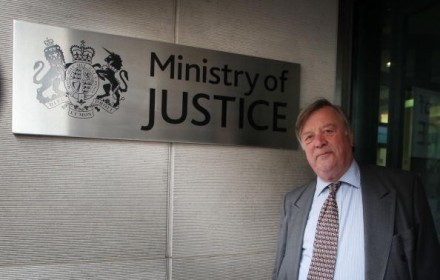
These very words will live to see the coalition via Ken Clarke to regret saying Britain's middle classes do not know what is about to hit them, Justice Secretary Kenneth Clarke has warned.

The Conservative minister said Middle England did not appreciate how hard the Government's spending cuts would affect their lives - but that would change this year once the cutbacks are felt.

Mr Clarke warned that there would be "no quick rebound" and it would be a "long haul" before the economy gets back to normal.

Speaking to the Daily Telegraph, he said: "One reason we're going to get some political difficulty is that (while) the public knows we've got to do something about it, I don't think Middle England has quite taken on board the scale of the problem.

"That will emerge as the cuts start coming home this year. We've got to get on with it [but] it's going to be very difficult. If someone says it's not as bad as all that, I say (they) just don't realise the calamitous position we're in.

I don't think Middle England has quite taken on board the scale of the problem. That will emerge as the cuts start coming home this year.

Justice Secretary Kenneth Clarke

"We're in for a long haul to get back to normality. There are so many uncertainties internationally, and I do not see a quick rebound."

Mr Clarke was chancellor of the exchequer in the last Conservative government.

His warning comes after shock figures showed that the economy shrank in the last three months of 2010, raising new fears of a possible double-dip recession.

Meanwhile, the country's biggest union will stage a huge rally later to launch a campaign against "catastrophic" cuts and thousands of job losses in youth services.

Unite warned that one in four youth services such as volunteering projects and youth clubs in England faced spending cuts of up to 30%.

Some local authorities, including those in Norfolk, Suffolk, Buckinghamshire and Manchester, were planning to axe youth services altogether after having central government funding slashed, said the union.

Around 1,000 young people, some as young as 12, are expected to join today's protest in Solihull, West Midlands.

Gloves Off Gove Councils Win Fight Over School Improvement Cuts


The Government's spending cuts have been dealt a blow after six local authorities won the right to challenge the Education Secretary's decision to cancel school building projects.

The school improvement project had been announced by Labour

The Building Schools for the Future (BSF) programme - initially proposed by Labour - was drastically curtailed last July after the Coalition took power.

BSF was among the first education schemes to be cut back by Education Secretary Michael Gove.

But Mr Justice Holman, sitting in London, declared Mr Gove had unlawfully failed to consult them before imposing the cuts.

In five of the cases the failure was "so unfair as to amount to an abuse of power", said the judge.

The victorious authorities include Waltham Forest Council, Luton Borough Council, Nottingham City Council, Sandwell Council, Kent County Council and Newham Council.

Michael Gove

Education Secretary Michael Gove is to look again at his decision

The judge said: "However pressing the economic problems, there was no overriding public interest which precluded consultation or justifies the lack of any consultation."

Mr Gove's decision-making process was also unlawful "because of his failure to discharge relevant statutory equality duties under the Sex Discrimination Act, Race Relations Act and Disability Discrimination Act."

A Department for Education spokesman said: "We are delighted that the judge did not call into question the decision to end the wasteful and bureaucratic Building Schools for the Future programme.

"On the substantive points he concluded that it was a rational decision and that the authorities involved had no expectation of being allowed to proceed with their projects."

The ruling calls into question every school building scheme cut by Michael Gove and is a damning verdict on his competence as a Minister.

Shadow education secretary Andy Burnham

"Mr Gove will now look again at his decision with regard to these authorities with an open mind, taking representations from them, he said.

Shadow education secretary Andy Burnham said: "This ruling is a victory for all the communities and children betrayed by Michael Gove.

"They deserve no less than a full apology from him today and a commitment to act quickly on the court's finding.

"The ruling calls into question every school building scheme cut by Michael Gove and is a damning verdict on his competence as a Minister.

"He must tell us today how much public money he has spent trying to defend his botched and unfair decisions."

Chris Keates, general secretary of the NASUWT teaching union, said: "The councils involved are to be congratulated for making a stand on this issue.

"The coalition Government has shown time and again a reckless disregard for due process and consultation.

"Teachers, pupils, parents, and local councils were all sidelined. Since May 12, programmes, grants and organisations have been thoughtlessly abolished with little, if any, regard for the consequences.

"BSF was a classic example of this, and it's now come back to bite the Secretary of State."

Thursday, 10 February 2011

Ed Miliband & Douglas Alexander MP celebrates Chinese New Year With Chinese Community Leaders

Senior members of ‘Chinese Communites met up 9 Feb 11 at Portcullis House, Westminster, to celebrate ‘Year of the Rabbit’.

The Labour Party is proud of the vibrant Chinese community across the United Kingdom. They bring with them an international cuisine, diligent work ethics, cherished culture, and values that are akin to Labour’s.

Hard working families wanting the best for their children so that they can move up the social ladder, engaging in community organising, entrepreneurial zeal in running businesses, caring for our elders – these are intrinsic Labour values, which we can all be proud of.

Chinese and Labour values whether it is about individual, families or communities are aspirational and progressive. These values prepare us well for increasingly challenging times.

Sonny Leong, President of ‘Chinese for Labour’, gave the speech, as well as Ed Miliband MP and Douglas Alexander MP.

Chinese Communites and the Chinese media from all over the UK came to the event to listen to the leader of the Labour Party about the forgotton community.